When is hurricane season, and when should you prepare your outdoor kitchen?
The Atlantic hurricane season runs from June 1 to November 30. The National Hurricane Center puts the peak at September 10, with most activity between mid-August and mid-October. Prepare your outdoor kitchen before June 1, then recheck it each time a storm enters the forecast.
The National Hurricane Center also reports that an average season from 1991 to 2020 brings 14 named storms, 7 hurricanes and 3 major hurricanes. Averages hide big swings from year to year. A quiet year in the Atlantic can still bring one bad storm to Tampa Bay.
Tampa Bay sits on the Gulf coast, so a written plan beats a rushed afternoon. Write down who shuts off the gas, who clears the patio and where the photos go.
What does a hurricane do to an outdoor kitchen?
Wind, water and flying debris do the damage. The National Weather Service lists storm surge flooding, inland flooding from heavy rains, destructive winds, tornadoes and high surf as the main hazards of a tropical cyclone. Each hazard hits an outdoor kitchen in a different way.
Storm surge can reach far inland. The National Weather Service notes that it “can travel several miles inland, especially along bays, rivers, and estuaries.” If you live near the bay, check your evacuation zone before you plan anything else.
Wind turns loose items into projectiles. A grill lid, a cushion, a trash can or a patio umbrella can strike a cabinet door or a window. Most of your prep work is about removing those objects.
What should you do with the loose items?
Remove or secure everything that is not fixed in place. Ready.gov tells households to “bring in outside furniture” and to clear drains and gutters. An outdoor kitchen adds a few more items to that list, and the built-in cabinets are the one thing you cannot carry inside.
Use this checklist when a storm is three to five days out:
| Item | What to do | Why |
|---|---|---|
| Grill lid, side burner covers, cooking tools | Bring indoors | They become debris in high wind |
| Cushions, umbrellas, loose chairs | Bring indoors | Wind lifts them quickly |
| Trash cans and recycling bins | Store in the garage | They roll into cabinets and glass |
| Items stored inside cabinets | Remove electronics, paper goods and food | Water can reach drawers and shelves |
| Drains and gutters near the patio | Clear leaves and debris | Water needs a path away from the cabinets |
| Propane tank | Follow your gas supplier’s instructions | Gas safety rules are specific to your setup |
| Refrigerator and appliances | Unplug and follow the maker’s guidance | Power surges and flooding damage them |
Photograph the kitchen before the storm. Date-stamped photos help if you file an insurance claim later.
What about the gas line and propane?
Shut off the gas supply and follow the instructions from your gas supplier and your grill maker. Rules for tank storage and gas lines vary by site. Ask your installer and your local building or fire department to confirm what applies to your home.
Innovation Cabinetry makes Endura cabinets for outdoor kitchens. The Endura line includes a propane pull-out cabinet, as shown in the company’s assembly guides. Do not treat any cabinet as a storm shelter for a tank. Handle the tank the way your gas supplier tells you to.
How do Endura cabinets handle water and weather?
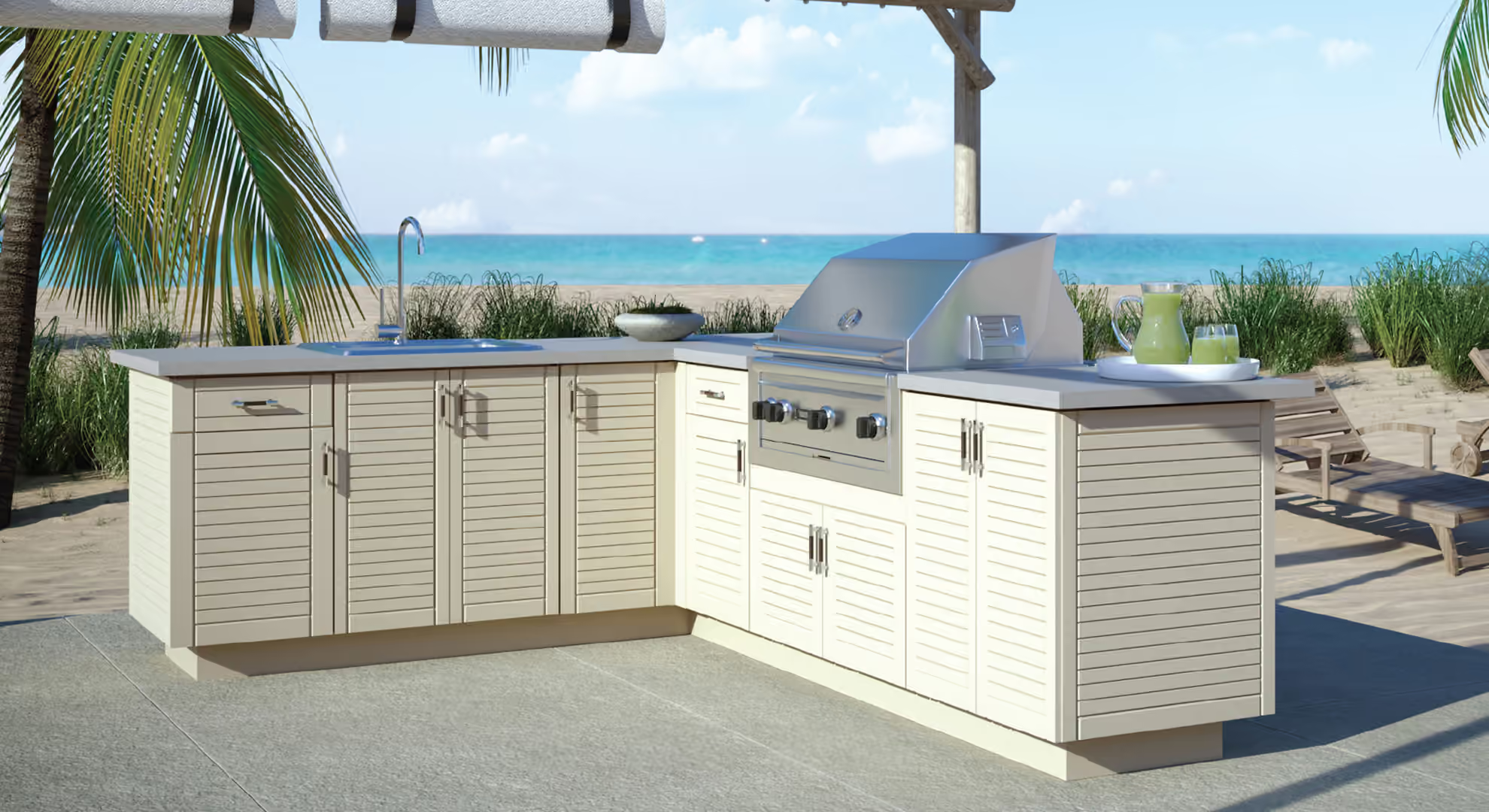
Endura cabinets are made of 3/4 in. marine-grade, all-weather HDPE, a plastic the brochure says will never rot, delaminate or splinter. The Endura brochure says the cabinets “never need sanding or painting.” The cabinets use adjustable legs made of 304 stainless steel that the brochure calls rust-resistant.
That material helps with everyday rain and humidity. It does not turn a cabinet into storm protection. Innovation Cabinetry does not claim any wind rating, flood rating or hurricane rating for Endura. Surge water, debris and a damaged roof or wall can harm any outdoor kitchen.
Cabinets that sit on adjustable legs keep the cabinet body off the ground. The Endura product page lists a total overall height adjustable from 34 in. to 35.875 in. Clean standing water and mud off the cabinets as soon as it is safe, then dry the area. The Endura care sheet from Innovation Cabinetry lists acceptable cleaners and says to keep a pressure washer at no more than 1,500 PSI.
What should you do after the storm?
Wait for the all-clear from local officials. Then check the area in this order:
- Look for downed power lines, gas smells and standing water before you step outside.
- Photograph all damage before you move anything.
- Have a licensed professional check the gas line, the electrical circuits and any appliances that got wet.
- Remove mud and debris, then rinse and dry the cabinets with the cleaners the care sheet allows.
- Check doors, drawers and soft-close hinges for movement and debris.
- Contact your insurer, then your dealer if you suspect a product defect.
Endura carries a limited lifetime warranty. Hinges, leveling legs and factory-installed hardware carry a 5-year limited warranty. The warranty covers defects in material and workmanship under its stated terms, so read it before you file a claim. Register your warranty after you buy.
Can you plan the kitchen so it is easier to protect?
Yes. Keep gas lines short and easy to shut off. Place the kitchen away from large trees. Leave room to reach drains. Choose cabinets that need little post-storm work. The outdoor kitchen cabinet guide and the outdoor kitchen planning guide walk through these choices.
Ask your installer how the roof, posts and slab around the kitchen will hold up in wind. The building around the cabinets matters as much as the cabinets. Your local building department can tell you what permits and codes apply to your patio or lanai.
Next step
See the Endura outdoor kitchen cabinets and compare door styles with your installer. Then find a dealer near you to plan a kitchen that fits your patio and your storm plan.
Frequently asked questions
When is hurricane season in Florida?
The Atlantic hurricane season runs from June 1 to November 30, according to the National Hurricane Center. Activity peaks around September 10, with most storms between mid-August and mid-October. Storms can form outside those dates, so keep your plan ready all year.
Can an outdoor kitchen survive a hurricane?
No cabinet maker can promise that. Wind, storm surge and falling debris decide the outcome, and the structure around the kitchen matters as much as the cabinets. Ask your installer and your local building department about your site. Innovation Cabinetry does not claim any hurricane rating.
Should I cover outdoor cabinets before a storm?
Clear and secure everything loose on and around the cabinets first. Covers can trap water or catch wind and tear loose. Follow the guidance from your installer for your layout. Built-in cabinets stay in place, so the main job is removing anything that can become debris.
What do I do with the propane tank?
Follow the instructions from your gas supplier, your grill maker and your local fire or building office. Shut off the gas supply before you leave. Do not store or move tanks in ways those sources do not allow.
Does the Endura warranty cover storm damage?
Read the Endura warranty text for the exact terms. It covers defects in material and workmanship under the conditions it lists. Use the warranty page to register your cabinets, and ask your dealer about what the warranty excludes.
Terms on this page
Sources
- NOAA National Hurricane Center: Tropical Cyclone Climatology
- Ready.gov: Hurricanes
- National Weather Service: Hurricane Safety
Written by Innovation Cabinetry and checked against the sources above on October 2, 2026. Codes, standards and product details change, so check the linked page before you act.